Reliable localization and mapping are foundational for autonomous vehicles and robots, yet camera-centric systems often degrade in fog, rain, snow, glare or low light—exactly when robust perception is most critical. This talk explores radar-based simultaneous localization and mapping (SLAM) as a complementary and, in some scenarios, alternative for building maps and estimating position under adverse conditions. We’ll review the core principles of radar-based SLAM, what makes radar sensing fundamentally different from images and the practical challenges of working with sparse, noisy radar returns. We’ll then examine recent advances in radar-only SLAM, including novel “iterative closest point” approaches for pose estimation and implementations optimized for real-time performance. Attendees will leave with a clear understanding of when radar SLAM outperforms vision-only methods, what accuracy is achievable today and which applications can benefit most from radar SLAM.

Exploring Radar SLAM: Advancing Localization and Mapping for Automotive, Robotics and Beyond
Session Speakers
-
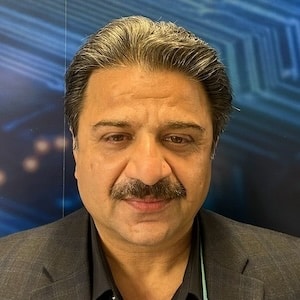
Amit Kumar
Director of Product Management and Marketing, Cadence
Amit Kumar is a senior automotive business line leader with over 20 years of global experience in the semiconductor and IP industry, specializing in product management, marketing, application engineering, business development and sales. His expertise is focused on automotive advanced driver-assistance systems, autonomous driving and robotics applications. Amit holds a bachelor’s degree in Electronics, a diploma in Computer Science, and a master’s degree in Business Administration with a specialization in Marketing and Finance. Amit has held senior roles at prominent global companies, including Ambarella, Toshiba America and NXP (formerly Philips Semiconductor). Currently, Amit serves as a Director of Product Management and Marketing for Cadence Design Systems’ Tensilica Product Group.